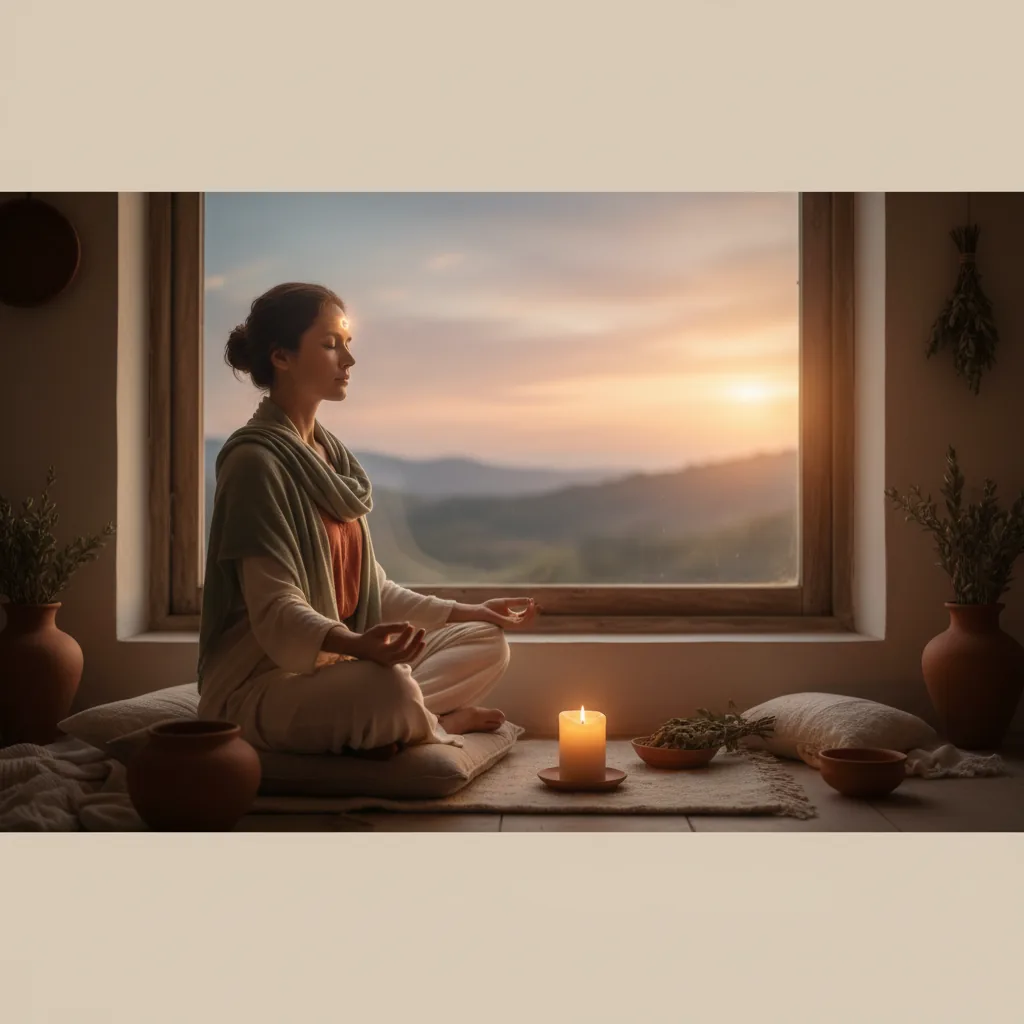
Learning how to open your third eye safely is less about a single dramatic breakthrough and more about building a nervous system that can hold expanded perception without destabilizing. The sixth chakra, or Ajna, sits between the eyebrows and governs intuition, inner vision, and the capacity to perceive what lies beyond ordinary sensory input. Most people who rush the process end up with anxiety, disturbed sleep, or a flood of impressions they cannot interpret. Patience and sequence matter more than intensity.

Before beginning any practice aimed at the third eye, you need a foundation. That foundation is the lower chakras: root (security), sacral (emotional fluency), solar plexus (self-trust). A third eye that activates before those centers are stable tends to produce fear rather than clarity, because vision without grounding has nowhere to land.
What the Third Eye Actually Is
The third eye is not a metaphor. Many meditation traditions identify it with the pineal gland, a small endocrine structure in the center of the brain that produces melatonin and, according to some research, traces of dimethyltryptamine. Ancient Egyptian, Hindu, and Taoist systems all reference a center of inner sight in the same anatomical location.
Functionally, opening this center means training your awareness to perceive subtle information: patterns in energy, symbolic impressions during meditation, heightened empathy, and a felt sense of knowing that precedes rational analysis. These capacities already exist in most people. The practices below are not about forcing something artificial; they are about removing interference and building the sensitivity to notice what is already there.
Signs Your Third Eye Is Beginning to Open
You may already be further along than you think. Common early indicators include:
- Pressure or a mild tingling sensation between the eyebrows during meditation or quiet focus
- Vivid, meaningful dreams that seem to carry information rather than random imagery
- Heightened sensitivity to other people’s emotional states, sometimes before they speak
- Noticing synchronicities, numbers, or symbols repeating in your environment
- A growing pull toward silence, nature, or solitary reflection
- Brief flashes of visual imagery when your eyes are closed
These experiences are normal. If they feel overwhelming at any stage, slow down and spend more time on grounding before continuing.
How to Open Your Third Eye Safely: Step-by-Step Practices
1. Ground Yourself First
Spend five minutes each morning with both feet flat on the floor. Breathe slowly into your belly. Visualize roots extending from the base of your spine into the earth. This is not optional prep work; it is the condition that makes everything else safe. People who skip grounding and dive straight into third-eye stimulation often report feeling unmoored or flooded with imagery they cannot contextualize.
2. Establish a Daily Meditation Practice
Sit quietly for fifteen to twenty minutes each day, ideally at the same time. Focus on the breath, and when attention wanders, return it without self-criticism. After two to three weeks of this baseline practice, you can begin adding third-eye-specific focus: gently direct your inner attention to the space between and slightly above your eyebrows. Do not strain or force. Think of it as listening, not pushing.
3. Use Mantra and Sound
The Sanskrit seed syllable for the Ajna chakra is “AUM” (or “OM”). Chanting it during meditation creates a subtle vibration that resonates in the skull and the cranial cavities. Sit comfortably, inhale, and on the exhale extend the sound slowly. Repeat six to nine times. You can also use Tibetan singing bowls tuned to the note A (associated with the third eye). Sound does not substitute for meditation; it complements it.
4. Work With Indigo and Violet
Color has measurable wavelength and interacts with the visual cortex. Spend time visualizing a deep indigo light at the Ajna point during meditation. Some people find it helpful to place a small indigo stone like lapis lazuli, sodalite, or amethyst near their forehead while lying down. Hold the stone at arm’s length, gaze softly at it, then set it on the brow for ten minutes while breathing slowly.
5. Reduce Sensory Overload
The third eye is a receiver. A system flooded with constant screen time, noise, and digital stimulation cannot easily tune to subtle frequencies. Build in at least thirty minutes of genuine quiet each day: no podcast, no music, no phone. Walk outside without earbuds. Sit in a dark room for five minutes before sleep. These are not dramatic rituals; they are the kind of space that allows inner signal to emerge.
6. Keep a Dream and Intuition Journal
Write down dreams immediately upon waking, before checking your phone. Also note intuitive impressions during the day: a feeling about a person before they called, an image that came to mind and later connected to real events. Over weeks, patterns emerge. This practice trains you to recognize the texture of genuine intuitive perception versus anxiety or imagination, which is one of the most practical skills in psychic development.
What to Avoid When Opening the Third Eye

Opening this chakra carries real risks when approached carelessly. The following practices can overstimulate the system and lead to destabilization:
- Using psychedelic substances as a shortcut. These can force a flood of visual and perceptual input before the nervous system is ready to process it. The opening produced this way often closes just as abruptly, leaving disorientation.
- Skipping lower chakra work. A root chakra that is shut down turns heightened perception into paranoia.
- Practicing late at night, especially when sleep-deprived. The boundary between symbolic inner imagery and anxious rumination thins with exhaustion.
- Pushing through discomfort or pressure during meditation. Mild warmth or tingling is normal. Sharp pain, disorientation, or dissociation are signals to stop and ground.
If at any point you feel cut off from your body, eat something, walk barefoot on grass or soil, and take a break from active practice for several days.
Intuition Versus Imagination: Learning to Tell the Difference
One of the most common frustrations people report early in third-eye development is not knowing whether what they perceive is genuine intuition or their own mind generating noise. The distinction, with practice, becomes more reliable.
Genuine intuitive impressions tend to arrive quietly and without emotional charge. They often feel neutral, almost matter-of-fact. They come before you have thought your way to them and tend to remain consistent when you return to the question later.
Imagination and anxiety generate impressions that shift when you probe them, carry a feeling of striving or urgency, and often escalate in response to fear. With regular journaling and meditation, you learn to recognize the difference in their texture. This takes months, not days, and that timeline is worth respecting.
When to Seek Guidance From a Live Reader
Some experiences that arise during third-eye opening are easier to navigate with support. If you are receiving consistent symbolic impressions that feel meaningful but difficult to decode, a live psychic medium can help you interpret what they mean for your specific path and circumstances. A skilled reader brings their own trained perception to your situation, which can help confirm or contextualize what you are experiencing. This is especially useful when you are early in development and not yet confident in distinguishing signal from noise.
Crystals That Support Safe Third Eye Opening
A few stones have a documented history of use in this work:
- Amethyst: calming, helps regulate the quality of inner vision, associated with the crown and third eye
- Lapis lazuli: historically linked to the Ajna center, supports clarity and discernment
- Labradorite: protective during expanded states, helps prevent energetic overload
- Sodalite: quiets mental chatter, supports structured intuitive development
Use these as supports, not shortcuts. Place them on your forehead during meditation, hold them during journaling, or keep them on your bedside table.
How Long Does Opening the Third Eye Take?
There is no single honest answer, because it depends on your baseline sensitivity, the consistency of your practice, and what you have already cleared from the lower chakras. Some people notice significant shifts within three months of daily practice. Others work steadily for a year before experiencing sustained change. The more useful question is not how long it will take, but whether your practice is steady enough to let natural development occur.
Consistency at a lower intensity outperforms sporadic high-intensity sessions every time. Twenty minutes daily, five days a week, will produce more lasting and stable development than a two-hour session on weekends followed by nothing.
Comparing Approaches: Faster vs. Safer
| Approach | Speed of Results | Stability | Risk Level |
|---|---|---|---|
| Daily meditation + grounding | Slower (weeks to months) | High | Low |
| Crystal work alone | Variable | Moderate | Low |
| Sound healing sessions | Moderate | Moderate | Low |
| Psychedelics or forced methods | Rapid | Very low | High |
The table above captures a simple truth: the faster the forced opening, the less stable the result tends to be. Stable development requires a system that grows into the new perception rather than one that is overloaded by it.
A Grounded Closing
Opening the third eye safely is not a destination you arrive at once and maintain without effort. It is an ongoing relationship with your own perceptual capacity. The practices outlined here, especially grounding, daily meditation, journaling, and sensory reduction, create the conditions for genuine, stable development over time. Avoid the pressure to accelerate, and trust the process enough to move slowly. The insight that comes from careful, grounded development is more reliable and more sustainable than anything forced. Build the container first. The vision will follow.
Frequently Asked Questions
How to open your third eye safely without side effects?
Begin with grounding practices and lower chakra work before focusing on the Ajna center. Keep sessions short (fifteen to twenty minutes), avoid sleep deprivation, and stop if you experience dissociation or sharp pressure. Daily consistency at low intensity produces safer results than occasional intense sessions.
How do I know if my third eye is opening?
Common early signs include a tingling or warmth between the eyebrows during meditation, more vivid and meaningful dreams, heightened sensitivity to others’ emotions, and noticing repeating symbols or synchronicities. These are normal and indicate the center is becoming more active.
Can opening the third eye cause anxiety or fear?
Yes, especially when the lower chakras are not stable first. Heightened perception without a grounded foundation can produce anxiety, disturbed sleep, or a flood of impressions that feel overwhelming. If this happens, return to grounding practices and pause third-eye-focused work for a week or more.
Which crystals help open the third eye safely?
Amethyst, lapis lazuli, labradorite, and sodalite are the most commonly used. Place them on your forehead during meditation or keep them near while journaling. They support the process but do not replace consistent practice.
How long does it take to fully open the third eye?
Most people notice genuine, stable shifts after three to twelve months of consistent daily practice. The timeline depends on your baseline sensitivity, how regularly you practice, and how much foundational lower-chakra work you have done. Rushing the process tends to produce instability rather than clear perception.